
Rivet manufacturing
At Lemec, we are your rivet manufacturer in Spain, specialized in the production of rivets by cold heading for big batches. Our dedication to quality and precision positions us as a leader in the industry, offering robust and durable solutions for a variety of industrial applications.
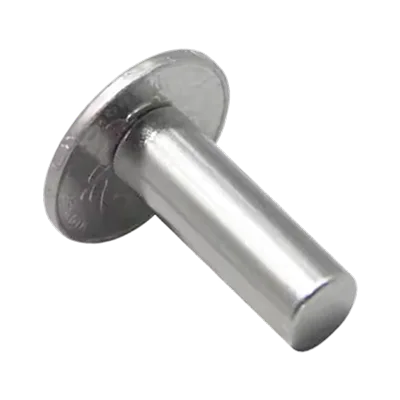

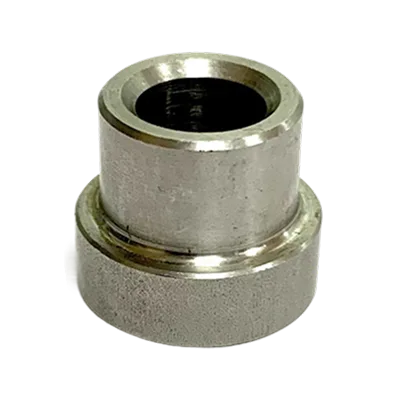


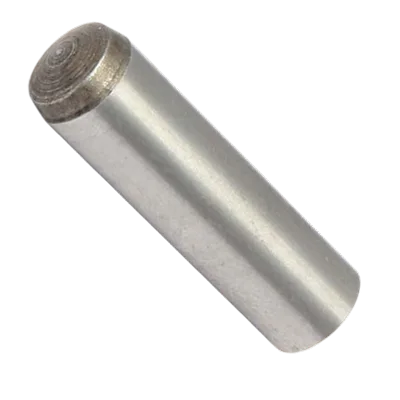


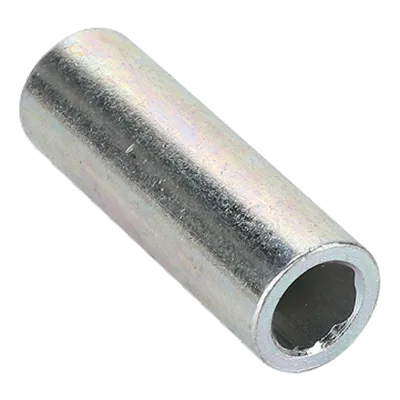
Manufacturer of rivets for special applications
Our rivets are manufactured to meet the needs of very specific industrial applications. At Lemec, we are a manufacturer of semi-tubular rivets that offer an excellent combination of strength and adaptability.
Rivets of various diameters are available to ensure a perfect fit in any application.
Semi-tubular rivets
Our semi-tubular rivets are ideal for APPLICATIONS REQUIRING A SECURE, DURABLE AND HIGH SPEED ASSEMBLY (ONE SHOT).
Precision engineered, these rivets ensure superior performance in critical environments.
Solid rivets
Solid rivets are ideal for applications requiring a permanent bond with maximum shear and tensile strength in both hot and cold riveting processes. Manufactured from high-strength steel, aluminum and copper using stamping processes, they guarantee a durable and stable anchorage even in environments with significant vibrations and dynamic loads.
Various diameter rivets
At Lemec, we have the capacity to manufacture rivets with various diameters in their structure. The objective is to adapt to materials of different thicknesses and to provide a robust and secure fixing. These rivets are especially useful in applications where a perfect fit is required in different layers of material, guaranteeing an optimal and resistant fastening.
Manufacturer of rivets in different alloys
Our experience in the manufacture of rivets in different alloys allows us to offer products that meet the highest quality standards. At Lemec, we produce rivets in steel, stainless steel, brass and aluminum, guaranteeing an adequate solution for every need.
Stainless steel rivets
Lemec stainless steel rivets are known for their corrosion resistance and durability, ideal for applications in harsh environments.
Brass rivets
We can also manufacture brass rivets that combine excellent corrosion resistance with an aesthetic appearance, perfect for applications that require both factors.
Aluminum rivets
For applications where weight is a critical factor, we have the capability to produce custom aluminum rivets to customer specifications.
Copper rivets
For applications where weight is a critical factor, we have the capability to produce custom aluminum rivets to customer specifications.
Rivets for different sectors
At Lemec, we manufacture rivets for a wide variety of industrial sectors, ensuring that each of our products meets the specific requirements of each industry.
Automotive
The automotive industry demands specific rivets to secure components with precision and
resistance, capable of meeting the specifications of this sector.
Construction
The construction industry requires rivets that provide secure and durable fasteners, essential for the structural integrity of elements that are part of buildings.
Aeronautics
The aerospace industry requires high quality and reliable rivets. Lemec manufactures customized rivets to ensure safety and efficiency in aerospace applications, we are EN9100 certified.
Cutlery
Both in cutlery and in cutlery in general, rivets are usually required to fix the handles.
Preguntas frecuentes
¿Qué tipo de remache me conviene para mi conjunto: macizo, semitubular o tubular?
• Macizo: máxima resistencia a cizalladura y tracción; ideal para uniones críticas y ambientes con vibración.
• Semitubular: menor fuerza de remachado, adecuado para chapas finas y para limitar deformaciones del material base.
• Tubular: soluciones ligeras y de deformación controlada en espesores reducidos.
En remaches especiales, se ajustan diámetros, cabezas y longitudes bajo plano para optimizar la unión.
¿Cómo se fabrican los remaches metálicos en serie?
¿Qué materiales y acabados superficiales recomiendan según el entorno de trabajo?
Acabados: cincado (blanco/amarillo), niquelado, pavonado, recubrimientos anticorrosivos tipo Zn-Al, y anodizado en aluminio. Se seleccionan por corrosión esperada, compatibilidad galvánica y estética.
¿Qué parámetros y controles críticos debe aseguras una empresa de fabricación de remaches como LEMEC?
• Concentricidad vástago-cabeza y rugosidad del vástago para facilitar el remachado.
• Dureza y ensayos de cizalladura/tracción del conjunto.
• Verificación por muestreo de lote, trazabilidad y control de acabados (espesor de recubrimiento).
¿Cómo dimensiono la longitud del remache en función del “grip” (espesor del paquete)?
L ≈ espesor total del conjunto (grip) + 1,3 a 1,5 × D
donde D es el diámetro del vástago.
Ejemplo: si el conjunto tiene 3 mm de espesor y el remache es D = 4 mm, una longitud orientativa sería:
L ≈ 3 + (1,5×4) = 9 mm.
Ajustar según tipo de cabeza y normativa requerida.