Cold heading of aluminum parts
Aluminum cold heading is one of the most demanded solutions in modern industry. This forming method allows companies to optimize their production processes, reduce costs and obtain parts of exceptional quality. If your goal is to improve competitiveness and ensure reliable results, discovering how to take advantage of the benefits of aluminum cold heading will be key to the success of your project.
Industrial uses of aluminum stamping
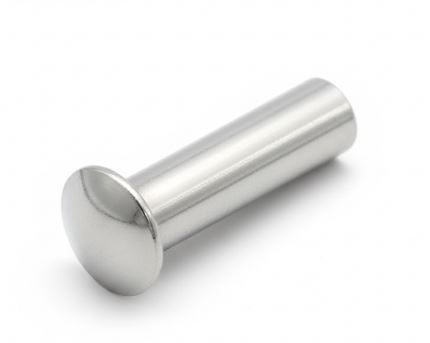
Aluminum cold heading allows the manufacture of parts with high precision and finish, suitable for multiple industrial applications. Thanks to the versatility of the material, this process adapts to the requirements of different production sectors, guaranteeing high quality and durability results.
In the automotive sector, aluminum stamping is used to produce lightweight components that help reduce the overall weight of vehicles and improve their fuel efficiency. In the aerospace industry, it produces strong, durable parts that can withstand extreme conditions without compromising safety or performance.
This process is also widely applied in electronics, where housings and components requiring precise tolerances are manufactured, as well as in the construction and manufacture of household appliances, to create structural and decorative elements. Finally, in the field of industrial engineering, aluminum stamping is essential for the development of prototypes and high-quality technical parts that optimize the production and performance of mechanical systems.
Need help?
Contact our technical office and tell us about your project.
We will study your case and propose a solution to manufacture them.
Aluminum alloys most commonly used in stamping
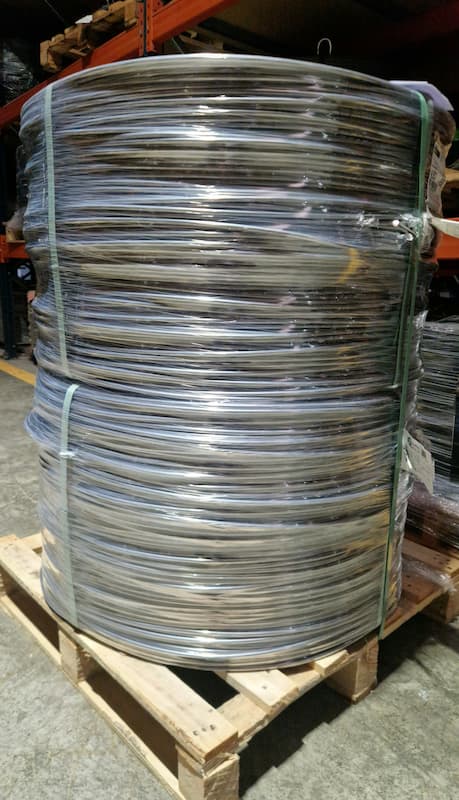
The most common aluminum alloys used in stamping include:
7xxx Series (Aluminum-zinc): High mechanical strength, used in aerospace applications.
1xxx series (pure aluminum): High electrical and thermal conductivity, ideal for electronic applications.
3xxx Series (Aluminum-manganese): Good corrosion resistance, used in the chemical industry.
5xxx Series (Aluminum-magnesium): Excellent corrosion resistance in marine environments, common in shipbuilding.
6xxx series (Aluminum-silicon-magnesium): Good combination of strength and machinability, widely used in the automotive industry.
Cold heading process for aluminum parts (stationary forming)
The process is carried out on specialized multi-stage machines, known as cold heading or cold upsetting machines, which automate the transformation of the raw material through different consecutive stations.
I. Preparation of starting material
1. Feeding and drawing
The input material is usually aluminum wire rod or wire in coils. Before being processed, it passes through a drawing or straightening station, where straightness and uniformity of diameter is guaranteed, ensuring accurate feeding to subsequent stages.
2. Billet cutting (shearing)
The wire is fed to a stop and cut to the required length to form the final part. Each segment, called a blank, forms the basis of the forming process.
II. Deformation phases: upsetting and extrusion
Once cut, the material is automatically transferred by a linear transport system through several dies and punches that apply high pressure to the aluminum, progressively modifying its shape until the final dimensions are reached.
III. Finishing stages
1. Part ejection
Upon completion of the last forming phase, the part is automatically ejected from the die, ready for inspection or further processing.
2. Secondary processes
Depending on the type of component, additional operations may be applied:
- Thread rolling, on screws or bolts.
- Deburring, to remove burrs or edges.
- Anodizing, to improve the corrosion resistance and aesthetics of aluminum.
Competitive advantages of the cold heading process applied to aluminum parts
Aluminum cold heading not only improves precision in the manufacture of components, but also optimizes the overall performance of the production process. This method makes it possible to work to tighter tolerances, reduce energy consumption and minimize material waste. In addition, its ability to maintain the mechanical properties of aluminum makes it an efficient and sustainable option compared to other metal forming processes.
Similarly, the advantages of today’s cold stamping technologies cold heading technologies have evolved to offer have evolved to offer greater automation, dimensional control and repeatability. As a result, manufacturers can guarantee a consistent level of quality even in high-volume production. The integration of advanced machinery and simulation software makes it possible to anticipate deformations, optimize dies and ensure a flawless surface finish on each stamped aluminum part.
Industrial applications of aluminum parts manufactured by cold heading
Aluminum cold heading is used in various industries:
- Automotive: Structural components, housings and interior parts.
- Aerospace: Aircraft parts requiring high strength and low weight.
- Electronics: Housings and internal components of electronic devices.
- Household appliances: Structural and decorative elements in household appliances.
- Construction: Architectural and enclosure elements.
Get in touch with us
Contact our technical office and tell us what kind of steel parts you need to manufacture.
We will study your case and propose a customized, fast and efficient cold stamping solution.