Manufacture of parts for the aeronautical and aerospace sector.
In the aerospace industry, precision and reliability are not optional, they are a must. Every bolt, nut or rivet that is part of an aircraft must withstand extreme conditions, meet millimeter tolerances, and offer total reliability and traceability.
In this context, the manufacture of parts for the aeronautical sectorby cold heading and bar turning has become the most efficient, safe and profitable option for obtaining high quality metal components.
Types of parts for the aerospace sector manufactured by cold heading and bar turning
The aerospace industry requires a wide range of fasteners and joining parts, all of which are critical to safety and performance. Among the most common are:
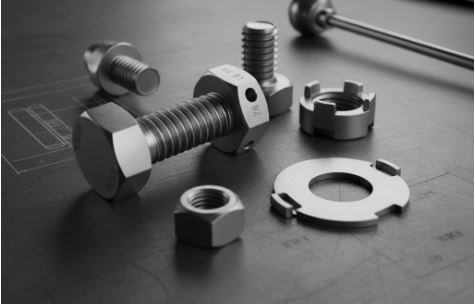
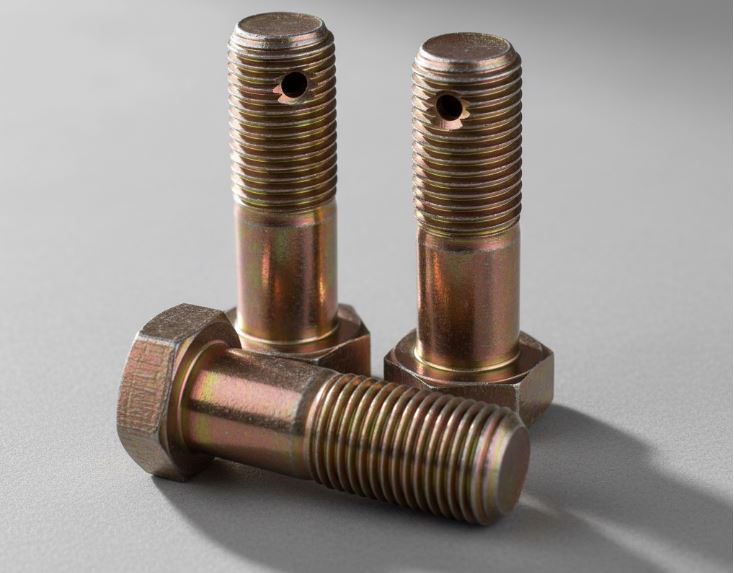
- Aeronautical bolts: they are mainly manufactured by cold stamping cold heading and cold heading y bar turningguaranteeing minimum tolerances and high precision threads. They can be produced in stainless steel, titanium alloys or aluminum.
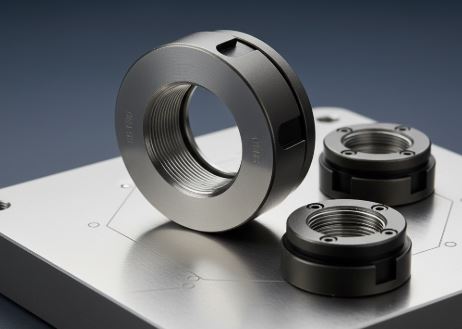
- Precision nuts: also obtained by bar turning, with specific heat treatments and anti-corrosion coatings.
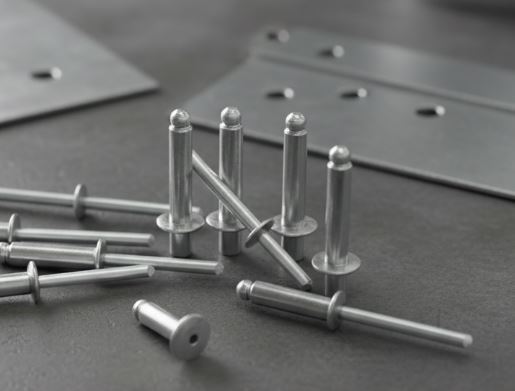
- Rivets and pins: manufactured by cold heading, as this process allows the production of large volumes with excellent dimensional repeatability.
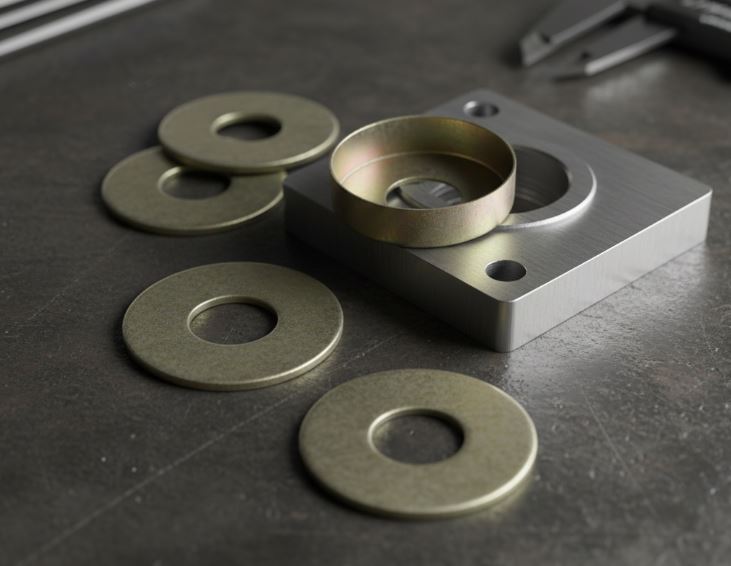
- Washers and bushings: simple but vital parts for structural assembly, also obtained by cold heading.
- Special fasteners: designed to drawing, combining stamping and machining processes to suit specific assembly or mechanical strength requirements.
Each type of part requires exhaustive quality control, full traceability and compliance with international aerospace standards.
Need help?
Contact our technical office and tell us about your project.
We will study your case and propose a solution to manufacture them.
Stamping processes applied to the manufacture of aeronautical parts
Cold heading consists of deforming the metal at room temperature by means of high-pressure dies. This process allows to obtain parts of constant geometry with high mechanical strength and a perfect surface finish.
Among its main advantages are the following:
- High production speed.
- Material savings (minimum waste).
- Dimensional accuracy without the need for subsequent machining.
- Excellent repeatability, ideal for long series.
It is therefore applied in the production of rivets, washers, bushings and light plates for aircraft structural assembly.
Bar turning processes in the manufacture of metal parts for aeronautical applications
Bar turning is a bar machining process that allows the manufacture of small and complex parts with high precision. It uses automatic lathes that work with very tight tolerances, ideal for screws, nuts, shafts and bolts in aeronautics.
Among its benefits:
- Flexibility to produce small or medium batches.
- Capability for complex geometries and special threads.
- High quality finishes without additional operations.
- Possibility of working with high resistance materials.
This process is key in critical components where the margin of error must be practically zero.
Factors influencing costs, volumes and feasibility in the manufacture of aeronautical parts.
The final cost of an aircraft part depends on multiple factors:
- Production volume: cold heading is more cost-effective for large series, while bar turning is ideal for short series or customized parts.
- Geometric complexity: parts with special tolerances or non-standard geometries require longer machining time.
- Cost of tooling and dies: in stamping, the initial investment is higher, but it is amortized in continuous production.
- Lead times and logistics: planning and traceability influence delivery times and final quality control.
A good manufacturing strategy combines both processes depending on the type of part and the volume of demand.
Quality control and certifications in the manufacture of parts for the aeronautical industry.
Quality control in the aeronautics sector is absolute. Each part must pass dimensional inspections, non-destructive testing and hardness or tensile tests.
In addition, the entire process must be traceable and documented, from raw material to final delivery.
Certifications such as AS9100, EN 9100 or NADCAP ensure that the manufacturer meets the highest international production and verification standards.
How to choose the best manufacturer of parts for the aeronautics sector with stamping and bar turning processes
Selecting a quality supplier like Lemec can make the difference between success and failure in an aviation supply chain.
Before contracting, it is advisable to evaluate:
- Experience in the sector and compliance with aeronautical regulations.
- Technical capacity in stamping and decoletaje.
- Current certifications and audits passed.
- Design and engineering advice to optimize costs and time.
- Commitment to quality and total traceability.
A manufacturer with these capabilities becomes a strategic partner, not just a supplier.
Request advice or quotation for the manufacture of aeronautical parts
If your company needs high-precision metal parts for aeronautical or aerospace projects, cold heading and bar turning processes offer an efficient and cost-effective solution.
Request a technical study or a customized quote for your next production run: optimize time, cost and quality with a manufacturer specialized in the sector.
Get in touch with us
Contact our technical office and tell us what kind of steel parts you need to manufacture.
We will study your case and propose a customized, fast and efficient cold stamping solution.