Lock Component Manufacturing: Cold Stamping and Screw Machining
Behind every lock that protects homes or businesses, there are dozens of parts that must meet millimetric tolerances to function as an integrated system. Yet few industry professionals truly understand how the internal components that determine a lock’s strength, durability, and reliability are manufactured. If you are looking for a supplier capable of producing these parts in series with the precision your product demands, understanding the industrial processes behind them will help you make better purchasing decisions.
Lock component manufacturing is not a single process but a combination of specialized techniques selected based on the geometry, material, and production volume of each part.
Need help?
Contact our technical office and tell us about your project.
We will study your case and propose a solution to manufacture them.
What Are the Internal Components of a Lock
A standard mortise lock is made up of multiple locksmith components that work in coordination: the cylinder (barrel), the key pins and driver pins, the springs, the plug, the cam, the latch bolt, the deadbolts, the strike plate, and the spindle. Each of these parts has different dimensional and metallurgical requirements, which calls for different manufacturing processes depending on the case.
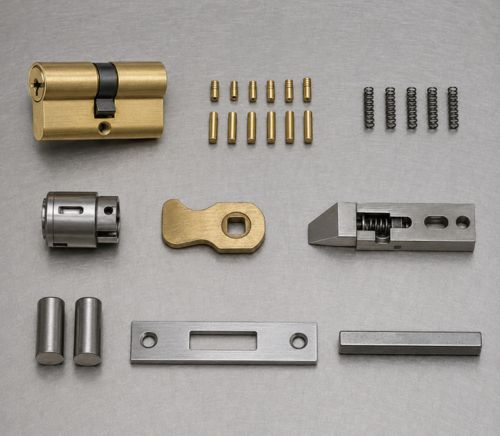
Lock Parts by Cold Stamping and Screw Machining
In the lock industry supply chain, two processes dominate the series production of these components: cold stamping and CNC screw machining. The key lies in knowing which process to apply to each part in order to optimize cost, precision, and mechanical properties.
Components Manufactured by Cold Stamping
The Cold stamping is the ideal process for lock parts produced by cold stamping and screw machining that require high mechanical strength and large volumes. Starting from wire or metal strip, the material is formed at room temperature using high-speed presses, which hardens the part through deformation and eliminates material waste.
Typical components manufactured by this process include:
- Deadbolts and pins: solid parts that project into the strike plate to establish the security lock.
- Latch bolts: elements with a wedge-shaped geometry that allow passage closure.
- Cams: parts that transmit the key’s torque to the internal mechanism.
- Rivets and bushings: fastening and structural support elements for the lock body.
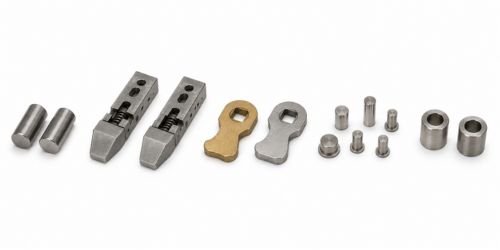
At Estampaciones Lemec, we manufacture these components in long runs with dimensional repeatability that ensures a perfect fit in every assembly.
Components Manufactured by Screw Machining
CNC screw machining is the process suited for small-diameter cylindrical parts that demand very tight tolerances, in the range of hundredths of a millimeter. The process works from brass, stainless steel, or copper bars on CNC automatic lathes.
Common components include:
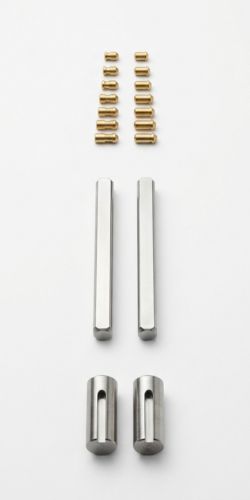
- Key pins and driver pins: the critical parts of the cylinder, whose variable length defines the key combination.
- Spindles: steel shafts that connect the handles and transmit rotation to the latch mechanism.
- Plug shafts: high-precision parts that allow rotation within the cylinder’s housing.
Security Cylinder Elements
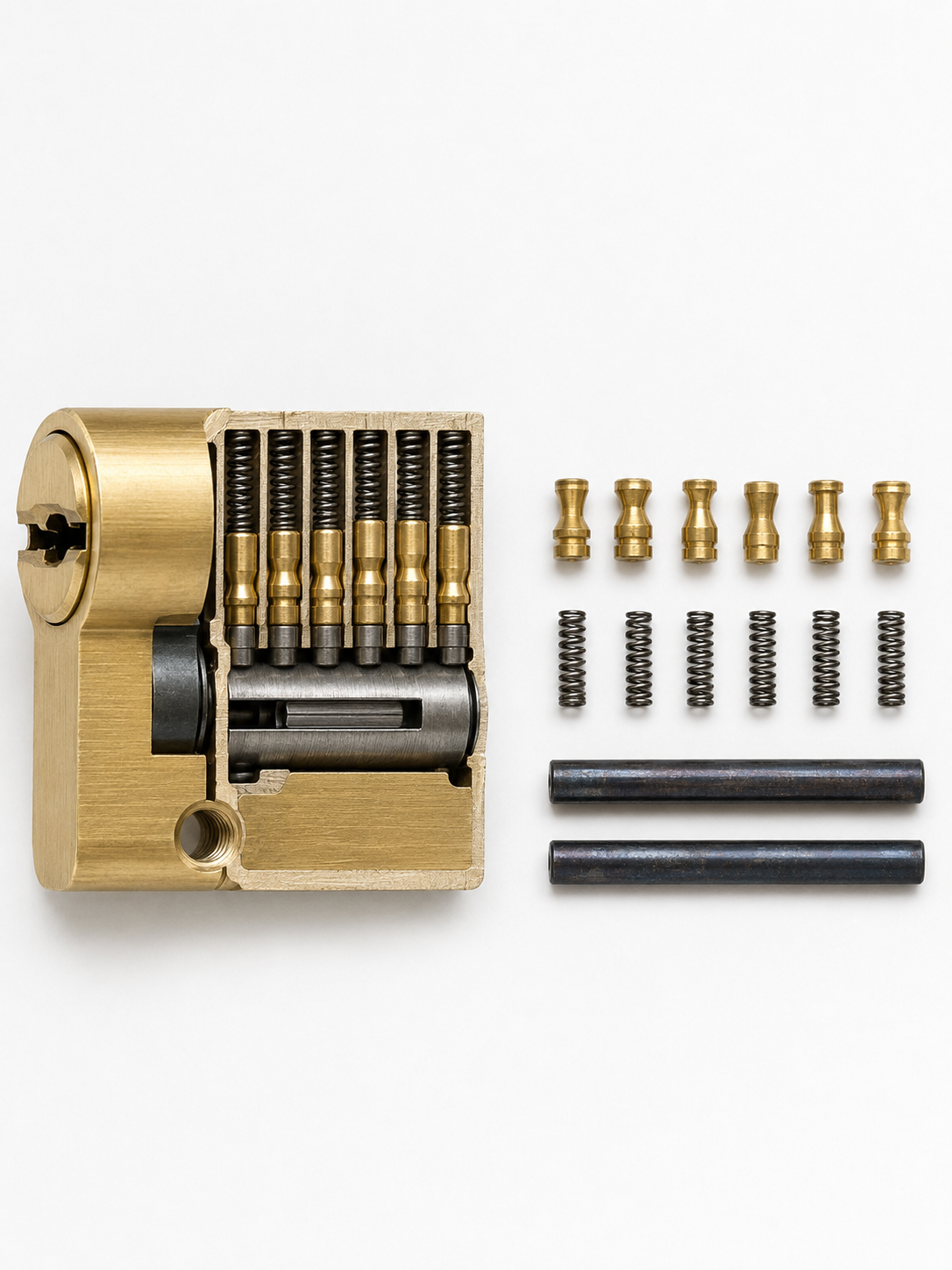
The cylinder is the primary target of break-in attacks, and its security cylinder elements require particularly demanding manufacturing.
- High-security pins feature anti-pick geometries (spool or serrated profiles) that are machined by screw machining with special profiles.
- Internal springs are manufactured by cold coiling with tempered steel.
- Anti-snap bars are produced in hardened steel through stamping followed by heat treatment.
Components for Mechanical and Electronic Locks
The sector’s evolution has expanded the demand for components for mechanical and electronic locks. While mechanical locks require conventional pins, cams, and deadbolts, electronic locks incorporate:
- Metal brackets for PCBs
- Precision housings
- Electrical contacts
- Connector pins
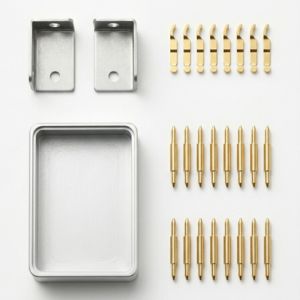
Both types share the need for metal parts manufactured to strict tolerances, whether by cold stamping or screw machining.
Precision Machining for Locksmithing: Materials and Finishes
Precision machining for locksmithing uses materials selected according to each part’s function: brass for key pins (low friction and corrosion resistance), stainless steel for security deadbolts (maximum mechanical strength), and zamak or aluminum for housings and bodies. After manufacturing, finishes such as nickel plating, chrome plating, electrolytic zinc plating, or bluing are applied to ensure corrosion protection and extended service life.
Hardware and Locksmith Components for Windows
The window sector also demands series-manufactured locksmith components: cremone rods, locking points, perimeter deadbolts, and security pins. These parts are predominantly manufactured by cold stamping due to their strength and high-volume production capability.
Why Trust a Specialist Manufacturer for Locksmith Components
The difference between a reliable lock and a vulnerable one is measured in tenths of a millimeter. Every pin, every deadbolt, and every cam must meet exact specifications for the system to function as a whole. Choosing a manufacturer with proven experience in lock component manufacturing is not a cost but an investment in the quality and reputation of your final product.
At Estampaciones Lemec, we have been manufacturing metal parts by cold stamping and screw machining for the locksmith and hardware sector for over 60 years. If you need a supplier with industrial capacity, IATF 16949, ISO 9001, and ISO 14001 certifications, and experience in manufacturing to drawing, contact our technical office to request a quote.
Do you need a manufacturer of high-precision lock components?
Get in touch with us
Contact our technical office and tell us what kind of steel parts you need to manufacture.
We will study your case and propose a customized, fast and efficient cold stamping solution.